الأغاني
سلوا كؤوس الطلا
Salou Ku'us al-Tila (Ask the Cups of Wine)
- السنة
- 1938
- كلمات
- أحمد شوقي
- ألحان
- رياض السنباطي
- المقام
- Huzam
السطور الموسومة بعلامة ذهبية تحمل شرحًا — اختر أيّها لقراءته.
سلوا كؤوسَ الطِّلا هل لامستْ فاها
Salu ku'usa t-tila hal lamasat faha
Ask the cups of wine: did they ever touch her mouth?
The opening plants the song squarely in the khamriyya, the Arabic wine-song tradition running from the Abbasid libertines to the Sufi mystics — then reverses its polarity. Classically the drinker seeks the wine; here the cups themselves are interrogated for the privilege of having touched her lips. The beloved does not taste the wine; she consecrates it. Shawqi keeps the genre's glamour and discards its dissipation in a single courtly turn.
The poem's journey to the stage was the slowest in her repertoire. In October 1932, days before his death, Shawqi sent the text to the young Riad al-Sunbati with his blessing; the composer later recalled living with it for years before the setting satisfied him. Umm Kulthum premiered it in 1938, in maqam Huzam — the solemn, quarter-tone-shaded mode Sunbati would make the signature of his grandest qasidas.
واستخبروا الراحَ هل مسّتْ ثناياها
Wa-stakhbiru r-raha hal massat thanayaha
Question the drink itself: did it graze her teeth?
باتتْ على الروضِ تسقيني بصافيةٍ
Batat 'ala r-rawdi tasqini bi-safiyatin
All night in the garden she poured me a clear draught
لا للسُّلافِ ولا للوردِ ريّاها
La li-s-sulafi wa-la li-l-wardi rayyaha
whose fragrance was neither the vintage's nor the rose's.
ما ضرَّ لو جعلتْ كأسي مراشفَها
Ma darra law ja'alat ka'si marashifaha
What harm, had she made her lips my cup —
The boldest line Shawqi permits himself: what harm if her lips had been my cup? The conditional "law" — if only — does all the work, desiring everything while claiming nothing. It is the decorum of the classical ghazal: audacity conducted entirely in the subjunctive, and Umm Kulthum delivers it with a lightness that lets the audacity pass as grace.
ولو سقتْني بصافٍ من حُميّاها
Wa-law saqatni bi-safin min humayyaha
had she poured me the pure wine of her own warmth?
هيفاءُ كالبانِ يلتفُّ النسيمُ بها
Hayfa'u ka-l-bani yaltaffu n-nasimu biha
Slender as the willow-branch, the breeze winds about her,
ويُلفتُ الطيرَ تحتَ الوشيِ عطفاها
Wa-yulfitu t-tayra tahta l-washyi 'itfaha
and beneath the embroidered silk her grace turns the birds' heads.
حديثُها السحرُ إلا أنه نغمٌ
Hadithuha s-sihru illa annahu naghamun
Her speech is sorcery — except that it is melody,
The famous verse, and the reason this poem matters to her biography: her speech is sorcery, except that it is song, as if it had run upon the lips of David — the prophet whose psalms are the tradition's very figure of divinely beautiful music. By widespread account Shawqi wrote the poem after hearing Umm Kulthum sing at his villa, Karmat Ibn Hani; the "enchantress" of the qasida is the woman who would one day sing it. She is, in effect, performing her own portrait.
جرتْ على فمِ داودَ فغنّاها
Jarat 'ala fami Dawuda fa-ghannaha
as though it ran upon David's lips, and he sang it.
حمامةُ الأيكِ من بالشجوِ طارحَها
Hamamatu l-ayki man bi-sh-shajwi tarahaha
Dove of the thicket: who traded songs of sorrow with her?
Mid-poem, the beloved dissolves into a dove of the thicket — the classical Arabic emblem of the voice that grieves beautifully. The questions ("who taught her sorrow? who whispered longing to her?") are the questions every listener asked about Umm Kulthum herself: where does a voice like that learn its ache? Shawqi's answer is the oldest one — from the night, and from love.
ومن وراءَ الدجى بالشوقِ ناجاها
Wa-man wara'i d-duja bi-sh-shawqi najaha
Who, from beyond the darkness, whispered longing to her?
ألقتْ إلى الليلِ جيدًا نافرًا ورمتْ
Alqat ila l-layli jidan nafiran wa-ramat
She offered the night a startled throat, and turned
An astonishingly exact picture of a singer in performance: the lifted, startled throat, the ear turned as if listening to the dark, the unfocused eyes. Anyone who has watched film of Umm Kulthum mid-qasida has seen precisely this posture. The poet describes the dove; the description is a portrait from the concert hall.
إليهِ أذنًا وحارتْ فيهِ عيناها
Ilayhi udhnan wa-harat fihi 'aynaha
an ear toward it, her eyes lost wandering in it;
وعادَها الشوقُ للأحبابِ فانبعثتْ
Wa-'adaha sh-shawqu li-l-ahbabi fa-nba'athat
then longing for the beloved seized her, and she rose,
تبكي وتهتفُ أحيانًا بشكواها
Tabki wa-tahtifu ahyanan bi-shakwaha
weeping, crying out at moments her complaint.
يا جارةَ الأيكِ أيامُ الهوى ذهبتْ
Ya jarata l-ayki ayyamu l-hawa dhahabat
O neighbor of the thicket — the days of love are gone
كالحلمِ آهًا لأيامِ الهوى آها
Ka-l-hulmi ahan li-ayyami l-hawa aha
like a dream. Ah, for the days of love — ah!
The poem ends on a sigh made into language — "ahan... aha" — and Sunbati, understanding the gift, makes the sigh the melodic destination of the entire work. In performance, including the celebrated evening at the Royal Opera House in November 1944, Umm Kulthum would return to the final line again and again, each "aha" placed differently — the purest demonstration that in tarab the wordless syllable can outweigh the sentence.
معنى الأغنية
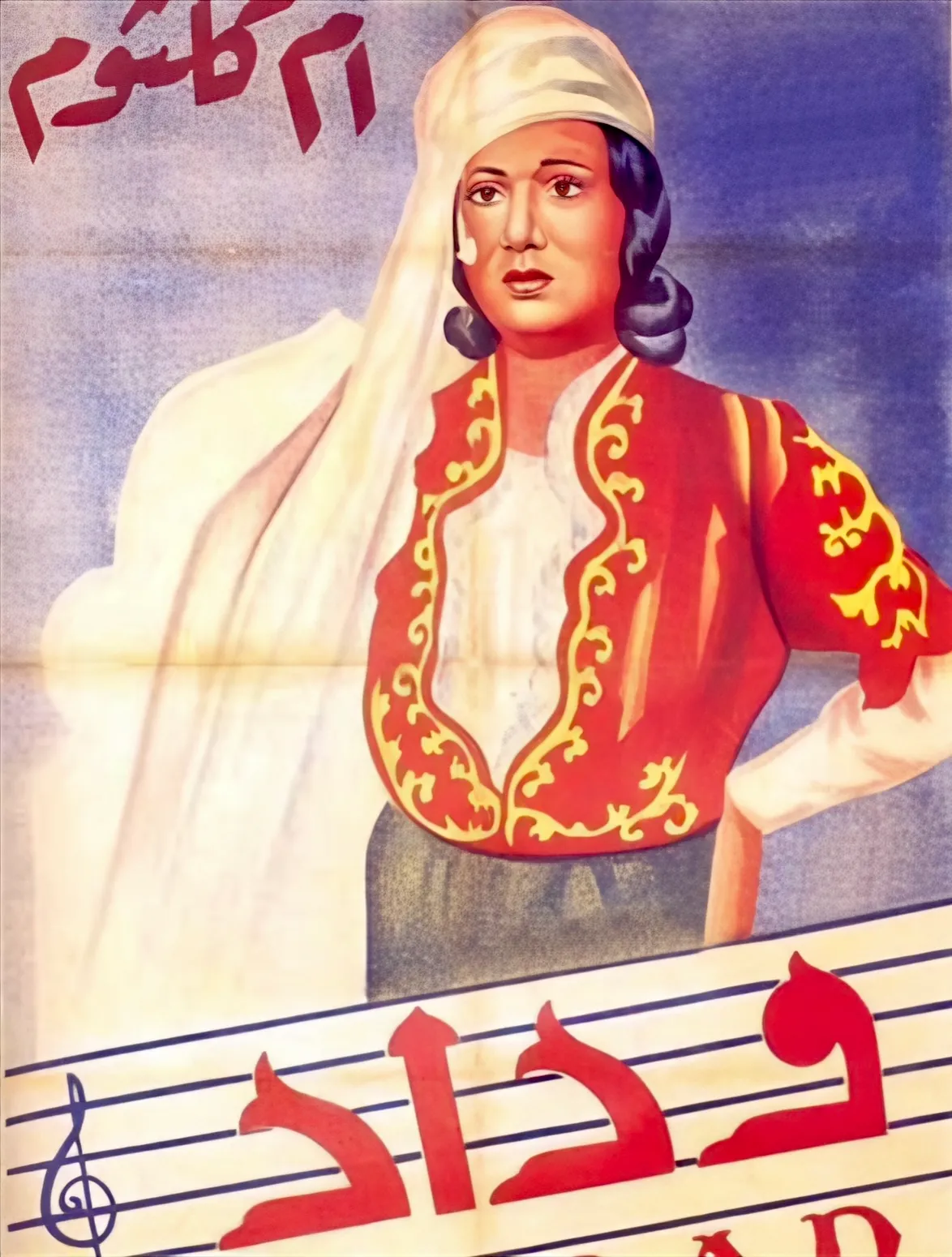
لهذه القصيدة مكانة خاصة بين كل ما غنّت أم كلثوم؛ فهي على الأرجح القصيدة الوحيدة التي تغني فيها صاحبةُ الصوت وصفًا لصوتها هي. تروي الحكاية المشهورة أن أحمد شوقي سمعها تغني في داره «كرمة ابن هانئ» فكتب فيها هذه الأبيات، ثم أرسل القصيدة في أكتوبر 1932، قبيل رحيله بأيام، إلى الموسيقي الشاب رياض السنباطي ليضع لها اللحن. وعاش السنباطي مع النص سنوات طويلة لا يرضيه فيه لحن، حتى خرجت الأغنية إلى الناس عام 1938 على مقام الهزام، وظلت من عيون قصائده، ومن أشهر لياليها حفل دار الأوبرا الملكية في نوفمبر 1944. والقصيدة في ظاهرها خمرية تنتسب إلى تقليد عريق في الشعر العربي، لكن شوقي يقلب التقليد رأسًا على عقب من البيت الأول: ليست الخمر ما يسكر الشاعر، بل إن الكؤوس نفسها تُستجوب: هل نالت شرف ملامسة فمها؟ فالحبيبة لا تشرب الراح، بل تباركها. ثم يمضي الوصف من القوام الهيفاء الذي يلتف به النسيم إلى الذروة الحقيقية: «حديثها السحر إلا أنه نغم، جرت على فم داود فغنّاها»، فإذا الكلام موسيقى، وإذا الصوت قريب من المزامير. وفي الثلث الأخير تتحول الحبيبة إلى حمامة أيك تلقي جيدها إلى الليل وتبكي أيام الهوى الذاهبة، وهي صورة يرى فيها كثيرون بورتريهًا دقيقًا لأم كلثوم نفسها في لحظة الغناء: العنق المرفوع، والأذن المصغية إلى العتمة، والعينان الحائرتان. ويختم شوقي بآهة صريحة مكتوبة في النص: «آهًا لأيام الهوى آها»، فيلتقط السنباطي الهدية ويجعل الآهة قمة اللحن ومستقره، وتعيدها أم كلثوم في كل ليلة بصيغة جديدة حتى تصير الآهة وحدها أبلغ من القصيدة كلها. هكذا اجتمع في عمل واحد نادر شاعر يودّع الدنيا بآخر عطاياه، وملحن شاب يبدأ به مجده الطويل، وصوت عظيم يقف ليغني مرآته الشعرية أمام الناس.
أغانٍ ذات صلة
كل الأغانيأنا في انتظارك
1943 · المقام Hijazkar
أنا في انتظارك (1943): النص الكامل لأغنية بيرم التونسي وزكريا أحمد — أم كلثوم تعدّ الغياب بالثانية. الكلمات كاملة مع الترجمة والشروح.
يا مسهرني
1972 · المقام Rast
يا مسهرني (1972): لحن سيد مكاوي الوحيد لأم كلثوم وآخر ما كتبه لها أحمد رامي — عتاب الساهرين على مقام الراست. مقتطفات مشروحة ومقال.
نهج البردة
1946 · المقام Rahat al-Arwah
نهج البردة (1946): معارضة شوقي لبردة البوصيري بلحن السنباطي على مقام راحة الأرواح — ذروة المديح النبوي في فن أم كلثوم، معنىً وسياقًا.
سلوا قلبي
1946 · المقام Rast
سلوا قلبي (1946): قصيدة أحمد شوقي بلحن رياض السنباطي على مقام الراست — الأغنية التي جعلت «وما نيل المطالب بالتمني» حكمة جيل بأكمله.
من الموسوعة
كل المقالاتمفاهيم
فهم المقام
دليل مبسّط إلى نظام المقامات — أرباع الأصوات والسير والطرب — عبر أربعة مقامات من أغاني أم كلثوم: الراست والكرد والهزام والفرحفزا.
مفاهيم
من أين تبدأ مع أم كلثوم: دليل المستمع
دليل المستمع الجديد إلى أم كلثوم: بأي الأغاني تبدأ، من إنت عمري إلى الأطلال، وكيف تستمتع بحفلات الطرب الطويلة وتسجيلاتها المتعددة.
مفاهيم
فن القصيدة
القصيدة أرفع ما غنّته أم كلثوم من الشعر الفصيح. جولة في سلوا قلبي والأطلال والرباعيات ونهج البردة، وفنّ رياض السنباطي في تلحين القصيد.