When Umm Kulthum died on 3 February 1975, her funeral drew millions of mourners into the streets of Cairo — by many accounts one of the largest gatherings in Egypt’s modern history, with the crowd at moments taking the bier onto its own shoulders and carrying it off the planned route. It looked like an ending. Half a century later, it is clear that it was nothing of the kind. Most singers leave behind recordings; Umm Kulthum left behind an institution, and the institution has kept operating without her. This article traces that afterlife: on the radio, in other singers’ throats, in Western studios and concert halls, in a Cairo museum, on hologram stages, and in the playlists of listeners born decades after her death.
Still on the Air
The most remarkable fact of her legacy is also the simplest: she never left the schedule. During her lifetime, from 1937, her concerts were broadcast on the first Thursday of every month, and Egyptian radio has honored that appointment ever since, sending the recorded concerts out at the old evening hour, decades after the voice fell silent. Her songs remain daily currency on stations across the Arab world, not as nostalgia programming but as core repertoire — the audio wallpaper of taxis, cafés, and kitchens from Casablanca to Baghdad. No other twentieth-century singer, in any language, has held a daily broadcast presence of comparable duration.
The Singers’ Singer
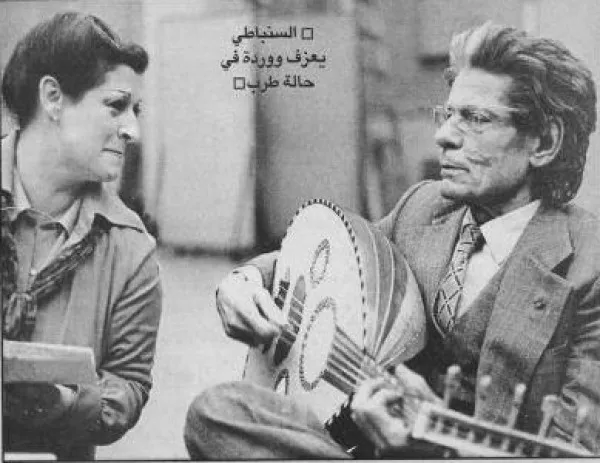
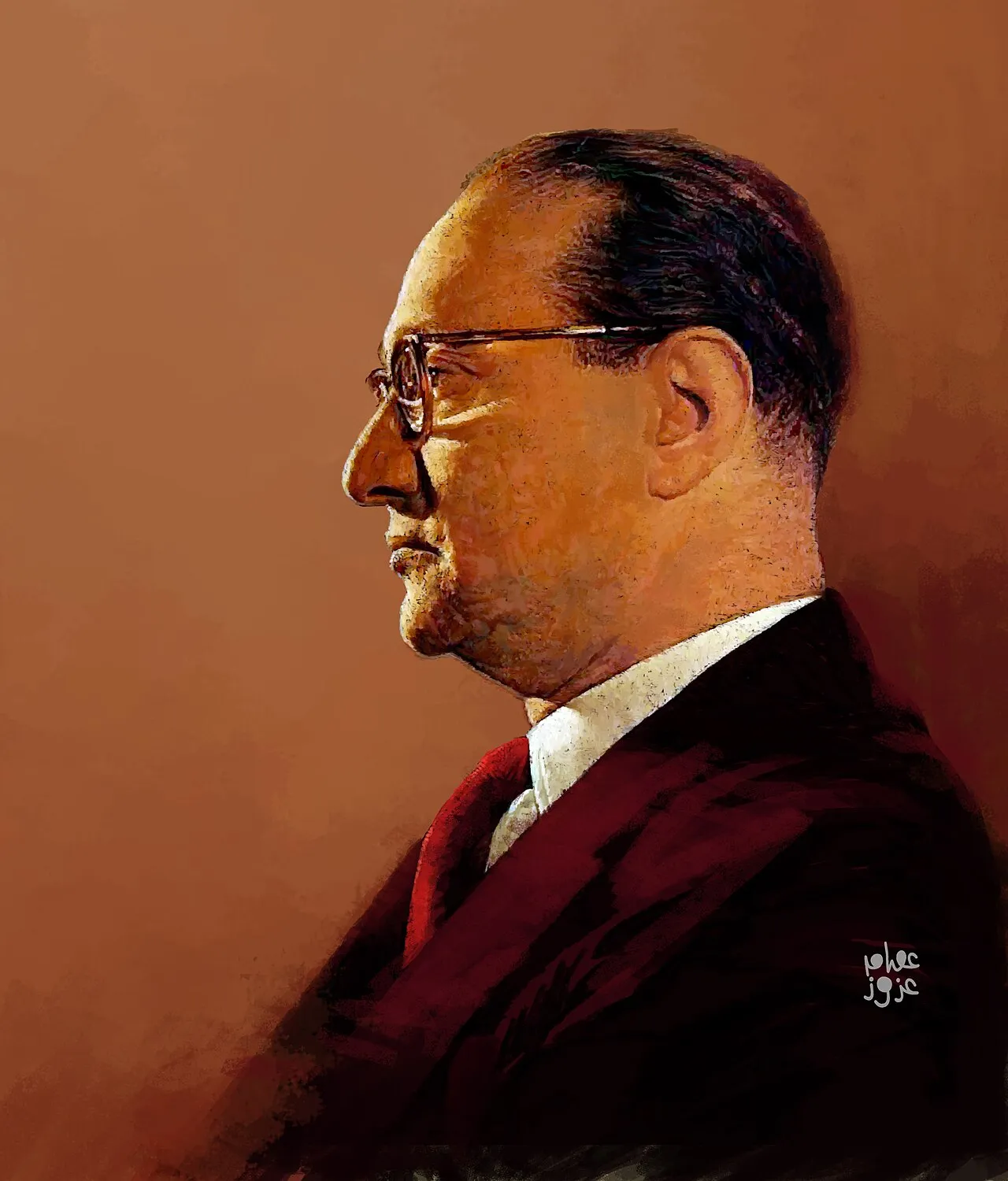
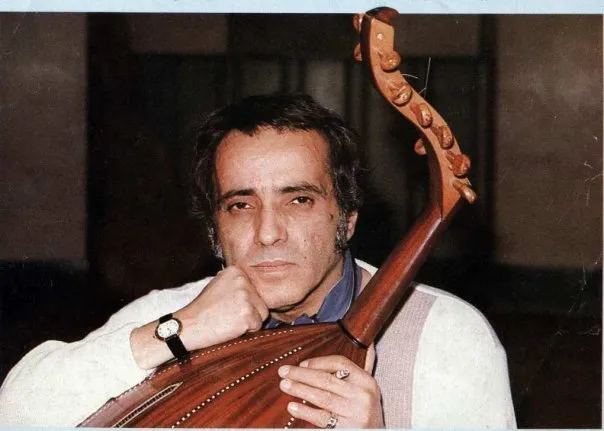
Within Arabic music her legacy is less an influence than an atmosphere; there is no path through the tradition that does not pass by her. She is the benchmark against which Arab vocalists are still measured, the standard audition piece on the region’s television talent shows, and the training ground on which singers learn what classical ornament, breath control, and clear classical diction are supposed to sound like. The great composers who built her repertoire — Riad al-Sunbati, Mohammed Abdel Wahab, Baligh Hamdi — remain the canon of Arabic songcraft largely because her performances fixed their works in collective memory. Her long-form concert aesthetic shaped what an Arab “musical evening” means to this day, and every subsequent star of Arabic song has had to answer, in one way or another, the question of standing in her shadow.
Western Ears
Her reception in the West has a curious shape: near-total obscurity among general audiences, and open awe among musicians who found her. The best-documented tribute is Bob Dylan’s. In his March 1978 Playboy interview he named “Om Kalsoum” as a great Egyptian singer he had discovered, saying simply: “She’s great. She really is. Really great” — and in a Rolling Stone interview the same year he cited her among his favorite singers. A compliment attributed to the opera diva Maria Callas — that Umm Kulthum possessed an “incomparable voice” — circulates in nearly every profile of her, though its original source is difficult to pin down; what can be said with confidence is that admiration from Western vocalists and rock musicians, Led Zeppelin’s Robert Plant among those frequently mentioned, became a fixture of how the Western press wrote about her.
The homages grew more concrete over time. Her melodies circulate constantly through DJ edits and electronic remixes, and fragments of her recorded world have reached Western pop through sampling — sometimes by winding routes, as when covers of Enta Omri by later Arab instrumentalists were themselves sampled into American hip-hop. The most substantial Western-facing tribute is the French-Lebanese trumpeter Ibrahim Maalouf’s 2015 album Kalthoum, a jazz suite that reimagines Alf Leila wa Leila — Baligh Hamdi’s 1969 monument — with a New York quintet; the record charted in France, was certified gold, and carried her longest-form music into jazz festivals worldwide.
A Museum on the Nile
Egypt gave the legacy a permanent address. On the grounds of the nineteenth-century Manasterly Palace, at the southern tip of Roda Island in Cairo, the state established the Umm Kulthum Museum, inaugurated on 28 December 2001 under the Ministry of Culture. Its collection is intimate rather than grand: stage dresses, her famous dark glasses and diamanté accessories, medals and decorations, personal papers and letters, photographs, and listening stations for the recordings. The scale is the point — a small palace room for a voice that filled continents — and the museum has become a standard station on the Cairo cultural itinerary, introducing her to tourists who arrive knowing nothing and leave with a name they keep encountering.
The Hologram Returns
The strangest chapter of the afterlife opened in January 2019, when a hologram of Umm Kulthum performed at the Winter at Tantora festival in AlUla, Saudi Arabia — a projected image of the singer fronting a live orchestra, produced by the broadcaster MBC. The apparition then toured the region’s grandest stages: the Cairo Opera House hosted hologram concerts in early 2020, and in August 2020 the Dubai Opera reopened after its pandemic closure with three nights of the hologram singing Al-Atlal, Enta Omri, and other classics to sold-out houses. Reviewers described the experience as moving and uncanny in equal measure; audiences wept and sang along anyway. Whatever one thinks of resurrecting singers by projector, the commercial logic was unambiguous: nearly five decades after her death, Umm Kulthum could still fill an opera house on her name alone.
Rediscovered by Streaming
The streaming era might have buried a catalogue of hour-long songs; instead it renewed one. Her recordings — official releases and countless concert transfers — sit on every major platform, where algorithmic recommendation does quietly what state radio once did loudly: places her voice in front of young Arab listeners, and diaspora listeners reconnecting with the language, who then discover that the forbidding hour-long masterpiece is in fact absorbing. Remixes and lo-fi edits act as gateways, and anniversaries of her death reliably produce waves of streaming tributes and press retrospectives. Meanwhile her image has become one of the Arab world’s most instantly readable icons: the chignon, the dark glasses, and the raised handkerchief appear on café walls, murals and street art, posters, and merchandise across the region — shorthand, needing no caption, for Arab music itself.
The Measure of It
Legacies usually decay into either oblivion or cliché. Hers has resisted both, and the reason is audible in the recordings: the performances were built to bear repetition — built from repetition — and so they survive it. The monthly broadcast, the museum on the Nile, the hologram in the opera house, and the playlist on a teenager’s phone are all doing the same thing her first-Thursday audiences did: returning to a voice that rewards return. The archive of songs on this site exists in that spirit — and her story as the voice of a nation explains how the legend was built in the first place.