Every country has beloved singers. Very few have a singer whose voice becomes, in some functional sense, part of the state’s own — played at moments of national consequence, folded into how citizens imagine their country. Umm Kulthum occupied that position in Egypt for decades, and the story of how deserves telling carefully, without either the hagiography or the cynicism that usually attends it.
Singing for Egypt
Her national role was not invented by any single regime. It accumulated. From the 1930s onward she recorded patriotic songs and religious works that placed her voice at the center of public occasions, under the monarchy first and the republic after it. When the Free Officers took power in 1952, the relationship deepened: the new state was building a mass culture through radio, and she was already its most commanding presence. She sang for the revolution’s anniversaries and its projects, and the presidency understood that her monthly concerts reached the Arab street more reliably than any communiqué.
It is fair to note — historians of the period do — that this closeness cut both ways. State radio amplified her; she lent the state a voice of unmatched authority. What kept the arrangement from being mere propaganda was that her core repertoire remained love, longing, and loss: the audience that heard her sing for Egypt was the same audience that wept through Al-Atlal. The national voice and the intimate voice were one instrument, and each borrowed power from the other. When her 1964 partnership with Mohammed Abdel Wahab produced Enta Omri, the press treated a love song’s premiere as an affair of state — which, by then, it effectively was.
After the Defeat
The June war of 1967 ended in a defeat so complete that Egyptians came to call it simply al-Naksa, the setback. In its aftermath, Umm Kulthum — approaching seventy and the most famous woman in the Arab world — converted her fame into a war effort. She announced a campaign of benefit concerts for the Egyptian state and spent the following years on the road: performances across Egypt and the Arab world, and, most famously, at the Olympia theatre in Paris in late 1967, her first major concerts outside the region.
The proceeds — by all accounts amounting to millions — went to the state treasury, and the campaign’s symbolic yield may have outweighed even the money. In city after city, the concerts became occasions for public resolve: a demonstration that the culture the defeat was supposed to have humbled could still fill any hall on earth. The monumental late works of these years, such as Alf Leila wa Leila (1969), belong to this chapter — a wounded country insisting, at maximum orchestral scale, on its own splendor. Listeners also began hearing older songs politically: after 1967, Al-Atlal’s celebrated plea for freedom carried a resonance no censor could assign or remove.
Umm al-Dunya
Egyptians call their country Umm al-Dunya — “mother of the world” — a phrase that claims for Egypt a kind of maternal seniority among nations. The rhyme between that epithet and the singer’s own name was too available to resist, and the culture did not resist it: Umm Kulthum was talked about as the mother-voice of the mother-country. Her other titles tell the same story from different angles — Kawkab al-Sharq, “Star of the East,” and the affectionate al-Sitt, simply “the Lady,” as though there were only one.
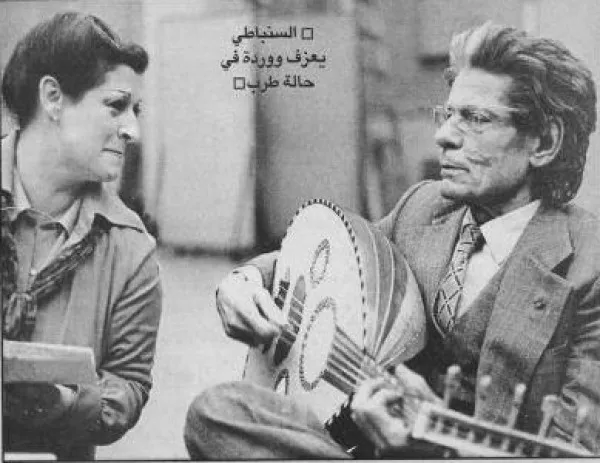
It is worth being precise about what this weight consisted of. It was not universal adoration; there were always listeners, especially younger ones in the 1960s, who found the long classical evenings a monument to the past. It was something rarer: consensus. Across class, region, and political divide, she was common ground — the one cultural fact nearly everyone in the Arab world could share. The composers who built her repertoire, Riad al-Sunbati chief among them, were building for that whole audience at once, and knew it.
A Measured Legacy
Her funeral in 1975 drew millions into the streets of Cairo, mourning a national institution as much as a woman. The decades since have only clarified the scale of the fact: her recordings remain daily presences on Arab airwaves, and no successor has assembled anything like her consensus — the media landscape that made it possible no longer exists.
The honest summary is neither myth nor debunking. She was a supremely disciplined artist who arrived together with mass radio and a nation-building state, and who used that conjunction — sometimes in the state’s service, always in her audience’s — to become the sound of a country’s feeling for itself. The songs in this archive are the evidence, and they are still doing the work.