History
The Complete Umm Kulthum Song List
The complete Umm Kulthum songs list, decade by decade from 1924 to 1973: every recorded song with its year, lyricist, and composer — nearly 320 works in all.
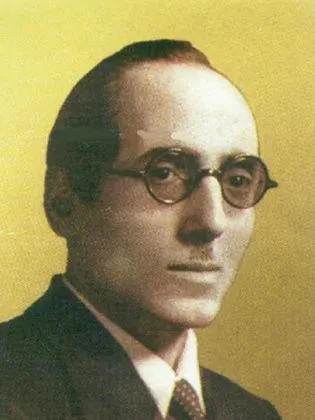
Composer
محمد القصبجي
1892–1966
Before Sunbati and Abdel Wahab, there was Qasabgi. Son of an Azhar-trained musician sheikh, Mohamed El-Qasabgi was Umm Kulthum's first great modernist: he began composing for her in the mid-1920s, soon after her arrival in Cairo, and for two decades his works anchored her recorded repertoire. It was Qasabgi who pioneered the Egyptian monologue — the through-composed dramatic song freed from strophic repetition — with "In Kunt Asamih" (1928) as its landmark, and who stretched the maqam tradition with harmonies and instrumental colors no one had dared before; "Raqq el-Habib" (1944), his last masterpiece for her, remains a benchmark of the form. When she turned in the 1940s toward Sunbati's classicism and Zakariyya Ahmad's earthiness, Qasabgi accepted a quieter fate with rare devotion: he stayed on as the oudist of her takht, seated near her on stage at every concert until his death in 1966 — the innovator who had opened her path, now accompanying the music of others. His oud playing, precise and songful, was itself a school; and his experiments made everything that came after him possible.
History
The complete Umm Kulthum songs list, decade by decade from 1924 to 1973: every recorded song with its year, lyricist, and composer — nearly 320 works in all.
The Ensemble
The composers behind Umm Kulthum: Qasabgi, Zakariyya Ahmad, Riad al-Sunbati, Mohammed Abdel Wahab, and Baligh Hamdi — and the sound each one gave her.