Enta Omri (You Are My Life) إنت عمري
1964 · Maqam Kurd
Enta Omri (1964): Umm Kulthum meets Mohammed Abdel Wahab in the 'meeting of the clouds' — history, maqam Kurd, and the meaning of her most famous love song.
Era · 1952–1967
حقبة الوطنية
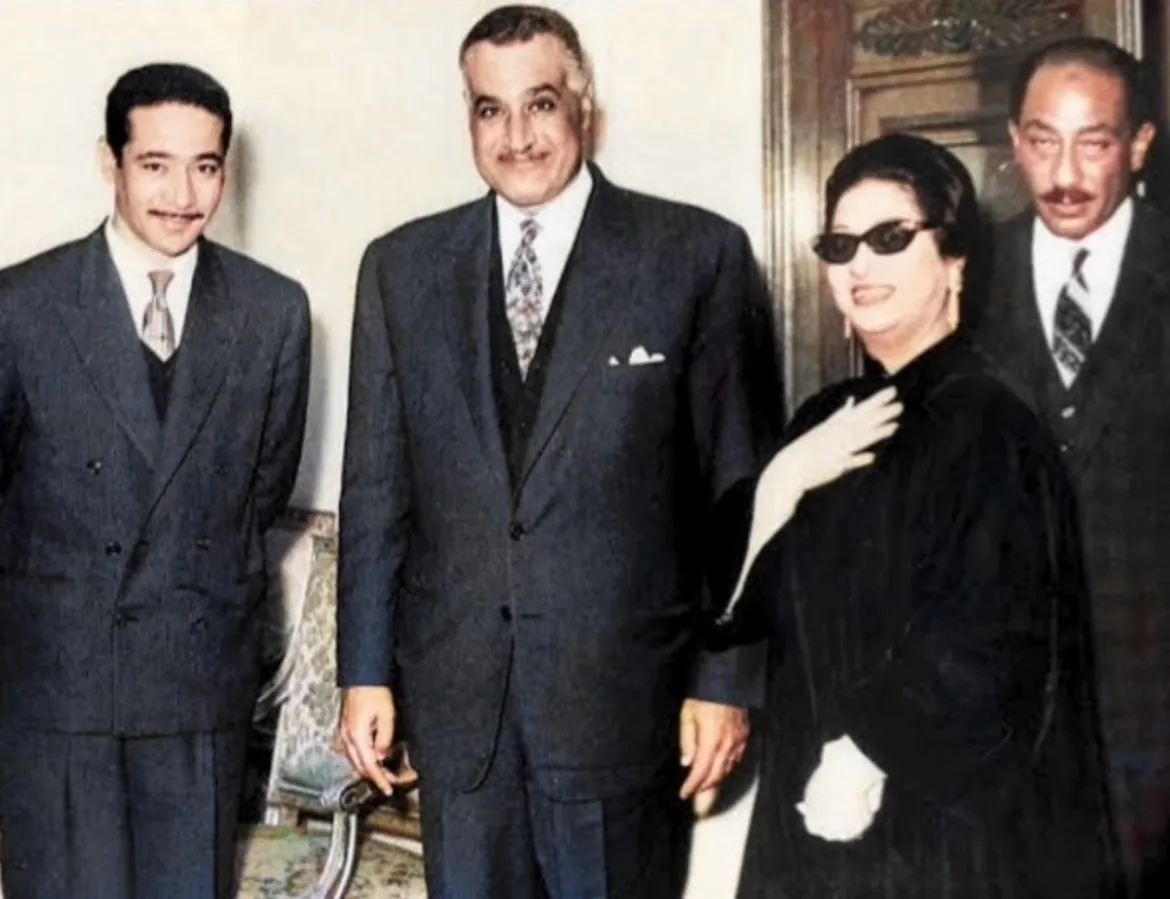
The Free Officers' revolution of July 1952 could have ended her career: some in the new order wanted the old regime's favorite singer off the airwaves. The story is often told that Gamal Abdel Nasser himself refused, asking whether they wanted all of Egypt to turn against them. Instead she became the republic's great voice. She sang for the revolution, the High Dam and the nation; her "Wallahi Zaman Ya Silahi" (1956) served as Egypt's national anthem from 1960 to 1979; and it was said that Nasser's speeches were scheduled after her broadcasts so they might inherit her audience. Artistically the era crested in the mid-1960s: "Hayyart Albi Maak" (1961) with Al-Sunbati; "Enta Omri" (1964), her long-awaited union with Mohammed Abdel Wahab that the press called the meeting of the clouds; the youthful hits of Baligh Hamdi; and "Al-Atlal" (1966), for many the greatest single achievement in twentieth-century Arabic song. The June 1967 defeat closed the era in grief — and transformed her sense of mission.
1964 · Maqam Kurd
Enta Omri (1964): Umm Kulthum meets Mohammed Abdel Wahab in the 'meeting of the clouds' — history, maqam Kurd, and the meaning of her most famous love song.
1966 · Maqam Huzam
Al-Atlal (1966): full lyrics of Ibrahim Nagi's qasida in Sunbati's maqam Huzam — with the seven spliced verses of 'Al-Wada'', translation and line notes.
1961
Hayyart Albi Maak (1961): Ahmed Rami and Riad al-Sunbati's late collaboration with Umm Kulthum — a study in longing, concealment, and live tarab practice.
1964
Sirat El Hob (1964): Umm Kulthum's confession of a lifetime spent fearing love — Morsi Gamil Aziz's lyric, Baligh Hamdi's setting, meaning & translation.
1965 · Maqam Kurd
Araka 'Asiyy al-Dam' (1965): Abu Firas al-Hamdani's captivity qasida in Riad al-Sunbati's maqam Kurd setting — annotated lyrics, translation, and its story.
1965 · Maqam Kurd
Amal Hayati (1965): Ahmad Shafiq Kamel's plea to stay inside love's dream, set by Abdel Wahab in maqam Kurd — meaning, translation & the story of its premiere.
1955 · Maqam Shahnaz
Shams el-Aseel (1955): full lyrics & translation of Bayram al-Tunisi's Nile sunset idyll, set by Riad al-Sunbati in maqam Shahnaz for Umm Kulthum.
1959 · Maqam Kurd
Hagartak (1959): Ahmed Rami's paradox of forgetting, set by Riad al-Sunbati in maqam Kurd — meaning and translation of Umm Kulthum's 'I left you' explained.
1960 · Maqam Ajam
Lissa Faker (1960): Riad al-Sunbati sets Abdel Fattah Mustafa's proud refusal for Umm Kulthum — 'that was long ago.' Annotated excerpts and essay.
1960 · Maqam Bayati
Hob Eih (1960): Baligh Hamdi's first melody for Umm Kulthum — Abdel Wahab Mohamed's defiant colloquial lyric in maqam Bayati. Meaning and translation explained.
1960 · Maqam Saba
Howwa Sahih el-Hawa Ghallab (1960): full lyrics & translation of Bayram al-Tunisi's last song for Umm Kulthum — Zakariyya Ahmad's maqam Saba farewell.
1965 · Maqam Bayati
Baeed Anak (1965): Baligh Hamdi's maqam Bayati hit for Umm Kulthum — 'far from you, my life is torment.' Annotated excerpts, translation, and the song's story.
1966 · Maqam Rast
Fakkarouni (1966): a chance remark rekindles a buried love — Abdel Wahab's maqam Rast setting, the famous one-word hook, meaning & translation of Umm Kulthum's classic.